
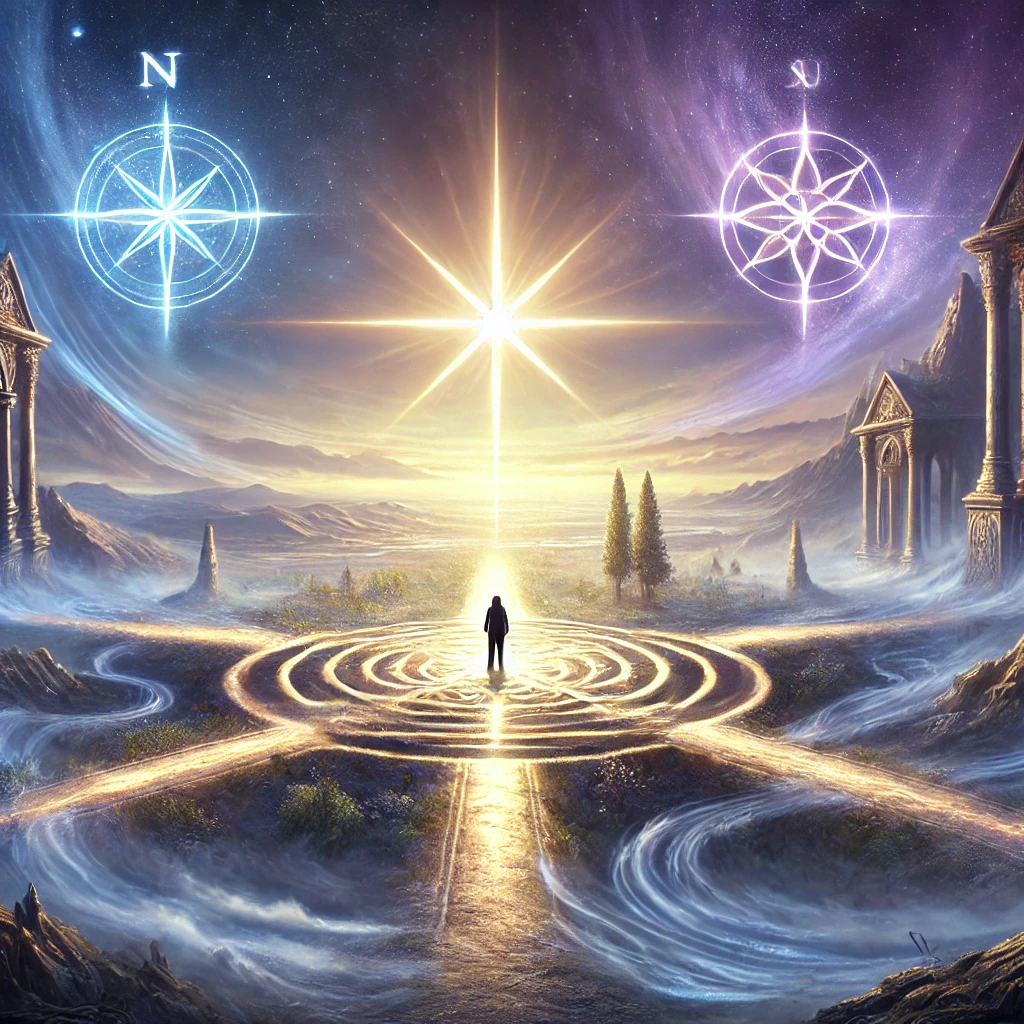
Today, I want to explore an intriguing concept of life, about the afterlife, drawing inspiration from the anime Jujutsu Kaisen, created by Gege Akutami. In this anime, the afterlife is portrayed as a journey with multiple paths—north, south, east, and west—each offering a different spiritual direction. To help clarify, let’s use an example: imagine a person who has just died and now finds themselves at a crossroads, with the choice of heading north or south.
If the person chooses north, it symbolizes a desire to remain the same, holding onto their current identity, beliefs, and experiences. It represents a continuation of their journey as they are, without radical transformation. This path can be interpreted as seeking stability or maintaining the status quo in the afterlife.
On the other hand, choosing south signifies a wish to become a new version of oneself. It represents a path of transformation and renewal, leaving behind the old self to embrace change and growth. This journey is not easy, as it involves facing challenges, difficulties, and perhaps even suffering, but it ultimately leads to personal development.
The meaning of these two choices runs deep. Choosing north or south can reflect the internal struggle between staying the same or embracing growth and transformation, a choice that resonates with many spiritual traditions.
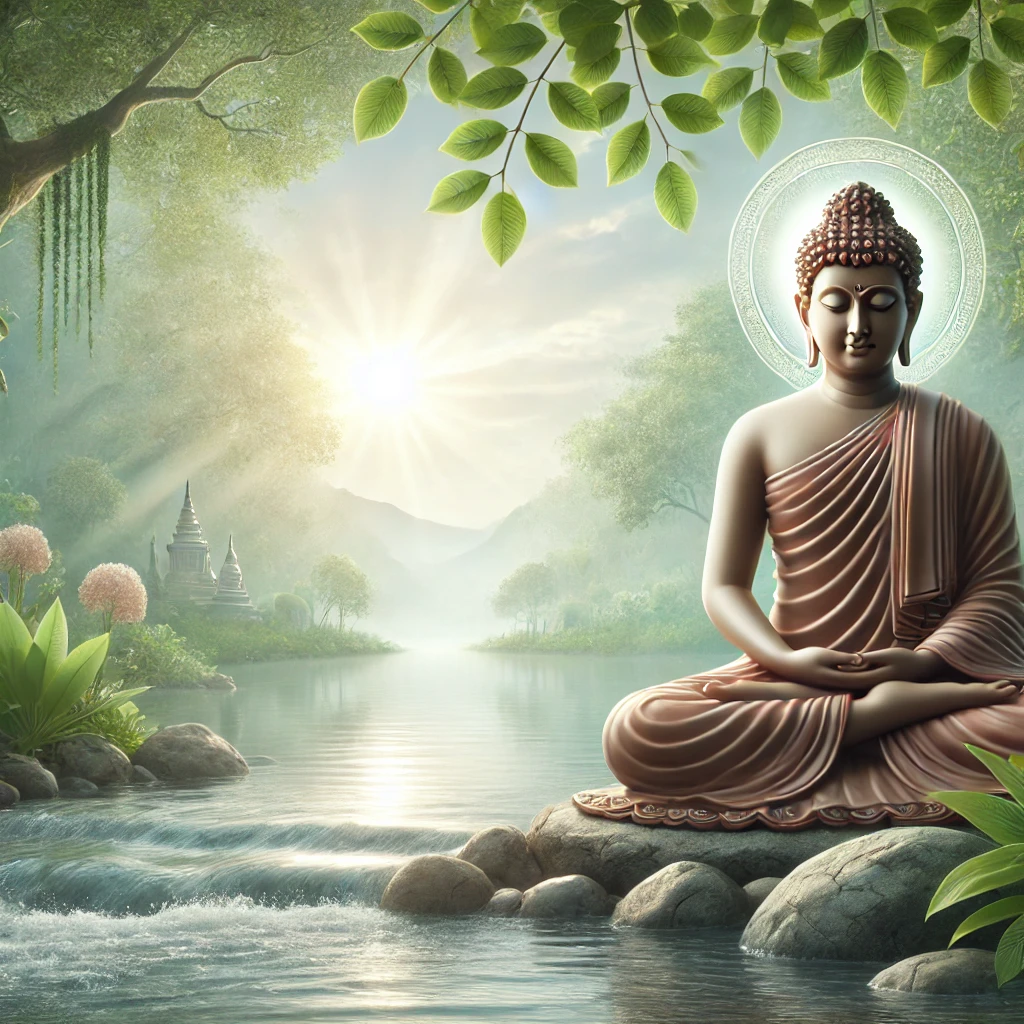
In Buddhism, the concept of directionality also holds symbolic significance. For example, east is associated with the birth of the Buddha, a place of new beginnings, enlightenment, and spiritual awakening. Heading east in a metaphysical sense can be seen as a journey toward spiritual rebirth and wisdom.
The west, on the other hand, is historically linked to the place where the Buddha delivered his first sermon, the Dhammacakkappavattana Sutta, which set the Wheel of Dharma in motion. It represents the spreading of spiritual teachings and knowledge. In the context of the afterlife, west could signify a place of deep understanding, the sharing of enlightenment, or the fulfillment of one’s spiritual path.
In Buddhist cosmology, the southern path often represents challenges, difficulties, and suffering, as it is believed to be closely linked to the earthly realm of desire and attachment. The struggles faced along the southern route serve as opportunities for growth, as overcoming these trials leads to spiritual advancement.
The northern path, however, is associated with wisdom and spiritual enlightenment. Heading north may symbolize a journey toward the attainment of higher knowledge, self-realization, and ultimate liberation from the cycle of samsara (the cycle of death and rebirth). It is a path of clarity and enlightenment that comes after transcending worldly struggles.
In Jujutsu Kaisen, as well as in Buddhist teachings, these directions offer powerful metaphors for the choices we face in life and beyond—whether to cling to what we know or embrace transformation, to seek wisdom or face suffering for the sake of growth. The symbolism of the four directions provides a framework for understanding our spiritual journey and the choices we must make on the path toward self-realization.
Let’s see what Bhagavad Gita tells about these words,
THE CONCEPT OF GOING SOUTH AND NORTH IN LIFE ACCORDING TO GITA:
The concept of going south can be connected with Krishna’s words to Arjuna, where he explains that life’s battles are opportunities to rise above our limitations and progress spiritually. Choosing the southern path, therefore, symbolizes accepting the struggles of life as a means for personal growth and transformation.
On the other hand, going north symbolizes choosing the path of wisdom, leading to liberation and unity with the divine power. The northern path represents spiritual enlightenment, reflecting the journey toward liberation (moksha) by overcoming attachments and desires.
CONCLUSION
In the realms of Buddhism and Hinduism, the divine seeks to guide us toward spiritual awakening and enlightenment through various cultural expressions and teachings. The choices we make in life and the afterlife significantly influence our personal growth and development. The Bhagavad Gita serves as a philosophical foundation for understanding these paths, whether they involve transformation, devotion, or the struggles we face. Each of these avenues contributes to the progression of our souls toward liberation (moksha).
The teachings found in these sacred texts are not limited to those who identify as spiritual. Even for those who may not embrace spirituality, the wisdom contained within the Gita and similar texts offers valuable lessons applicable to everyday life. By engaging with these teachings, individuals can cultivate personal well-being and develop a deeper understanding of their own motivations and desires.
In essence, the messages of growth and self-improvement present in these spiritual traditions serve as a universal guide. They encourage introspection, resilience, and the pursuit of a higher purpose, reminding us that our experiences—whether through joy or hardship—can lead to profound personal transformation. Ultimately, these teachings illuminate the path toward a more meaningful existence, fostering a sense of connection to oneself, others, and the broader universe.
Disclaimer: This discussion aims to explore concepts related to spiritual growth and enlightenment as presented in Buddhism and Hinduism. It is not intended to compare or contrast religions, but rather to highlight the unique teachings and philosophies within each tradition. I respect all belief systems and encourage open-mindedness and appreciation for diverse spiritual paths. Any similarities or connections drawn are meant to enhance understanding and dialogue rather than to suggest superiority or hierarchy among religions.
Thank you so much for reading this post. For personal growth you can read my other blogs on the website(Be the Limit)
Read my recent posts on self improvement which may help you.
Work Hard, Stay Quiet: The Best Success Mantra for life
The best success mantra in life, for me, is simple: work hard and stay quiet…
How to Escape the Social Media Trap?
Escaping the social media trap isn’t easy, especially in a world that thrives on constant…
HOW TIME IS IMPORTANT FOR ALL OF US?
Time is one of the most valuable assets in everyone’s life. Each of us is…
THE VALUE OF TAKING RISKS IN LIFE
Life is a journey full of opportunities and challenges, and it’s up to us to…
DOES BEING POWERFUL MEANS BEING FREE IN THIS WORLD?
Here, power doesn’t refer to physical strength but to positional authority. For instance, a president…
Why Silence and Solitude Matter in a Chaotic World?
In today’s fast-paced world, staying silent and isolating yourself can feel almost impossible. Yet, I…


Leave a Reply